
Fin Clipping and Fish Tales: A Day at the Hatchery
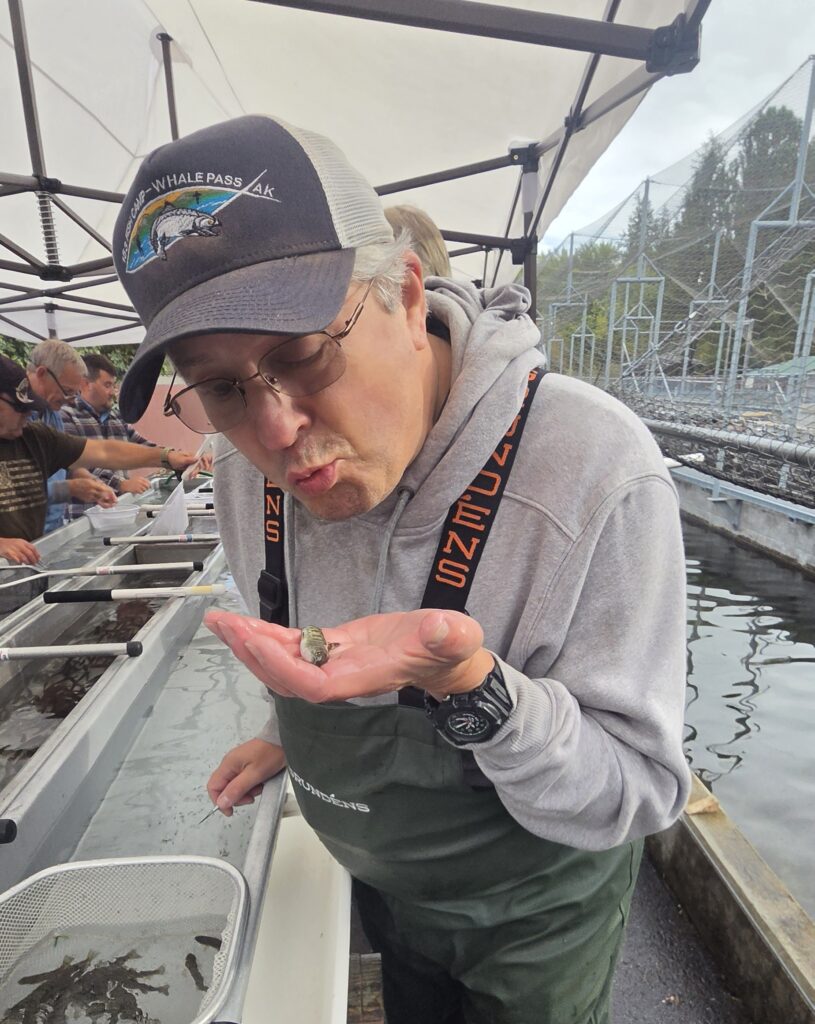
Sometimes the best way to understand the work behind wildlife and fisheries management is to roll up your sleeves and get involved. INWC’s Administrative Secretary, Lauren, had the opportunity to do just that when she joined fellow INWC members at the Spokane Fish Hatchery for the annual adipose fin-clipping event.
We’re pleased to feature Lauren as a guest contributor to our blog as she shares her firsthand experience, a few unexpected discoveries, and a behind-the-scenes look at the important work being done in partnership with the Washington Department of Fish and Wildlife.
Lauren’s Experience for the Adipose Fin Clipping at the Spokane Fish Hatchery
Written by Lauren Meeker
September 30 – Day 2 of Fin Clipping
On September 30, I had the opportunity to participate in Day 2 of the annual adipose fin clipping event at the Spokane Fish Hatchery, operated by the Washington Department of Fish and Wildlife (WDFW). Alongside fellow Inland Northwest Wildlife Council (INWC) members Rich Furry, Randy Jones, Mike Curry, M.H., Ken McNaughton, and M.F., as well as members of the Inland Empire Fly Fishing Club, I spent the day helping hatchery staff process triploid rainbow trout that will eventually be released into Long Lake next May.
When I arrived, Ken McNaughton gave me a quick briefing on the process and showed me the proper fin-clipping technique. Before long, I was getting the hang of it. Mike Curry joked that I would be a pro in no time, and less than 15 minutes later he laughed and said, “See Lauren, you’re already a pro!”
For those of you who don’t know, the Spokane Fish Hatchery raises triploid fish, meaning they have three complete sets of chromosomes instead of the usual two (diploid). This extra set makes them sterile where they cannot produce viable eggs or sperm so they do not expend energy on reproduction and can grow to large sizes. Hatchery staff explained that sterility is achieved through a combination of heat and pressure treatments early in the fishes’ development. Each fish also has an adipose fin clip. The adipose fin is the small, fleshy fin located between the dorsal fin and tail. Since it is the one fin the fish can function without, removing it provides anglers with a simple way to identify hatchery-raised fish. When anglers catch a fish with a clipped adipose fin, they know it originated from a hatchery and can legally keep it where regulations allow.
The triploid rainbow trout we worked with ranged from approximately 2” to some being close 4 inches in length. Hatchery staff shared several interesting facts about fish growth and feeding practices. They strive to distribute food as quickly as possible so all fish have an equal opportunity to eat. If food were delivered gradually, more aggressive fish could move from one feeding area to another and outcompete smaller fish for food. Staff also noted that some fish are naturally smaller than others due to genetics, not because they are receiving less food.
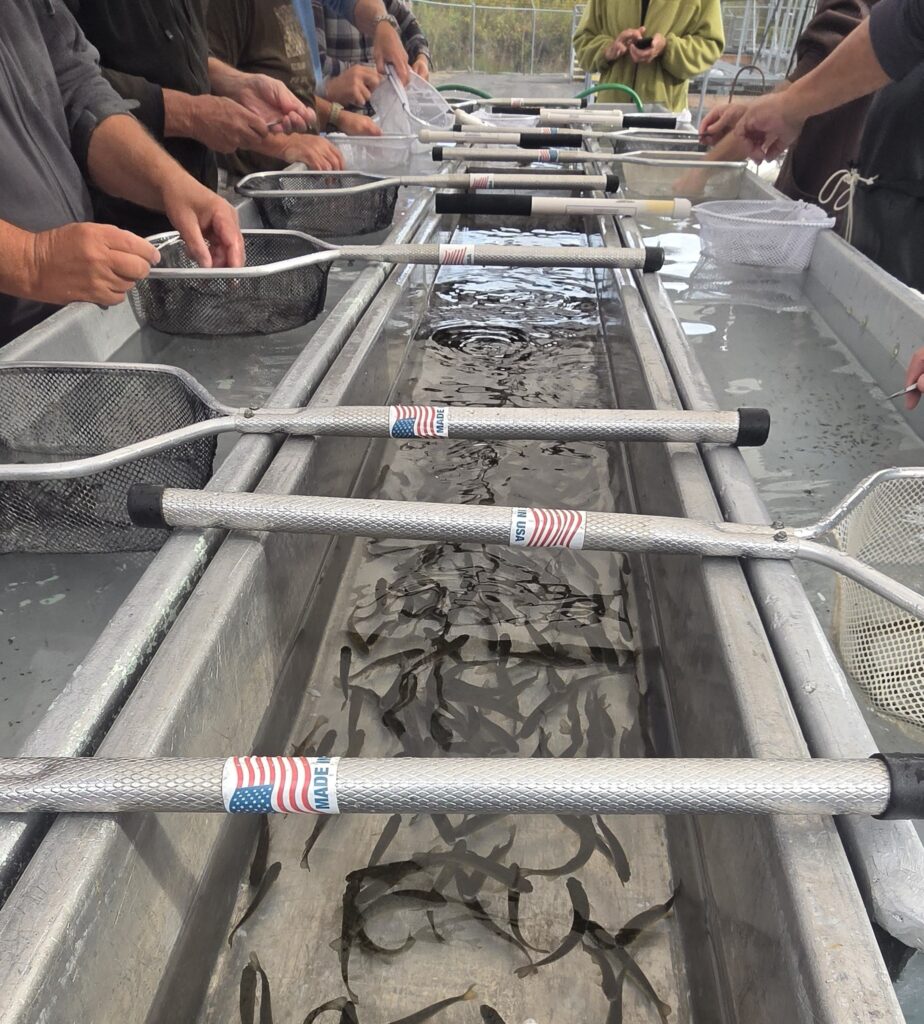
The clipping process itself was fascinating. Hatchery workers first netted fish from the rearing ponds and transferred them into a central holding area containing salt water. Volunteers would then use smaller nets to collect anywhere from a dozen to a few dozen fish at a time and place them into a tank containing a short-acting anesthetic.
The fish would splash and swim vigorously for about 30 seconds before the anesthetic took effect and they became calm enough to handle safely. Once sedated, each fish was gently held, its adipose fin clipped, and then placed into a recovery tray with flowing water that carried it back to the designated clipped-fin pond. I was surprised to notice that many of the smaller fish seemed to take a little longer for the anesthetic to take effect. If a fish was still particularly squirmy when I picked it up, I would simply place it back in the net for a little while longer before trying again and move on to a different fish.
One of the most interesting things to watch was how quickly the fish’s natural instincts kicked back in during recovery. As they regained their strength and moved through the flowing-water recovery tray, many immediately began swimming or flopping upstream, just as they would in their natural environment.
Of course, there were a few adventurous fish throughout the day. Some managed to flop out of the holding sections or escape from the nets in the sedation station. When that happened, they would swim around briefly until someone scooped them back up, clipped the fin, and sent them on their merry way.
Not every fish looked exactly alike. We occasionally came across fish with unusual features such as oddly shaped noses or body deformities. The biggest surprise of the day, however, was finding a fish that didn’t belong at all. A bluegill had somehow made its way into the group and seemed determined to join the rainbow trout for the day’s activities.
Beyond the work itself, one of the best parts of the experience was spending time with fellow volunteers and hatchery staff. When we broke for lunch, most of the volunteers headed out, but a small group remained along with the WDFW hatchery crew. It was enjoyable listening to everyone’s stories and learning more about their experiences with fishing, conservation, and hatchery operations.
Overall, it was a very rewarding experience. The annual adipose fin clipping event, held each year on the last Tuesday and Wednesday of September at the Spokane Fish Hatchery, provides a great opportunity for volunteers to support fishery management efforts while learning firsthand about hatchery operations. I am grateful to have been able to assist WDFW alongside fellow INWC and IEFFC members, and I look forward to participating again in the future.