

Still Behind Closed Doors: What the WDFW Investigation Means for the Rest of Us A while back I wrote a piece called Behind Closed Doors: Why Transparency Matters in Washington’s Wildlife Policy. At the time, I was writing about a situation that was still unfolding, an investigation that had been ordered but not yet concluded, and a question that hung in the air over every hunter and angler in this state: what exactly has been going on inside the Washington Fish and Wildlife Commission? Now we know and it’s pretty much what we figured. If you haven’t been following the WDFW news, let’s recap a bit; It started with a vote in November 2022. The Fish and Wildlife Commission decided to end recreational spring black bear hunting in Washington. A lot of hunters were frustrated by that decision, and not just because they disagreed with it. They were frustrated because it didn’t make sense and they felt like the outcome had been decided before anyone walked into the room. The Sportsmen’s Alliance had the same feeling, and instead of just shaking their heads about it, they went and got the receipts. After a lengthy legal battle, they obtained thousands of commissioner emails, texts, and communications. What they found was enough to petition Governor Ferguson to remove four commissioners: Barbara Baker, Lorna Smith, Melanie Rowland, and John Lehmkuhl. What happened next says a lot about how far this had gone. Kelly Susewind, the Director of WDFW, went to Governor Ferguson and asked him to investigate the commission. The same commission that Susewind answers to. The same commission that has the authority to remove him from his job. That is not a small thing. When the director of an agency feels compelled to ask the governor to investigate his own bosses, something has gone seriously wrong. Ferguson ordered an independent investigation. Fourteen months and nearly $80,000 in taxpayer money later, the report landed on July 31st, 2026. The findings confirmed what the Sportsmen’s Alliance had been saying all along. Commissioners routinely ignored public records laws. They held illegal back-channel meetings outside of public sessions to align votes before anyone in the public had a chance to weigh in. They coordinated privately and repeatedly with outside advocacy groups that were actively suing the department. The Washington State Standard, the Spokesman Review, and NW Sportsman Magazine all covered the findings. The Sportsmen’s Alliance published the full report. (Read it. It is worth your time). And then there is the Hatchery Coalition. The Lummi Nation, Upper Skagit Indian Tribe, Tulalip Tribes, Squaxin Island Tribe, Puget Sound Anglers, and Ilwaco Charter Association wrote a letter to Governor Ferguson back in April, long before the investigation report was released. They were not writing about public records violations. They were writing about something more personal. The Coalition described firsthand experiences of dismissiveness toward Tribal perspectives, resistance to government-to-government engagement, and a lack of respect for Treaty rights and co-management responsibilities from Commissioners Ragen and Rowland. They noted documented incidents of unprofessional conduct, including dismissive remarks directed toward Tribal representatives. The letter, shared publicly by the Conservation Coalition of Washington, makes clear that the concerns about this commission go far beyond a policy disagreement between hunters and conservationists. When the tribes are sending letters to the governor, that tells you something. Now that you’re caught up, here is where it sits today: The report is out. The wrongdoing is confirmed. The Sportsmen’s Alliance has sent a formal demand letter to Governor Ferguson calling for the immediate removal of all four commissioners. Three of the four have terms that expire at the end of 2026. Governor Ferguson has not yet publicly stated what he intends to do. And here is the part that should get your attention: right now, as of this writing today, WDFW is holding public meetings and accepting comments on proposed hunting and fishing regulations for the next three years. The comment period runs through August 30th. These are the rules that will govern your deer season, your waterfowl season, your upland bird season for 2027 through 2029. And the four commissioners at the center of all of this are still on the commission. I am not going to tell you how to feel about that. You are all adults and you can draw your own conclusions. But I will ask the question out loud that I think a lot of us are already asking quietly: how do we trust that the decisions coming out of this commission right now are being made on the merits? How do we know that the public comments being submitted by thousands of Washington hunters and anglers are actually going to matter when we have a documented pattern of outcomes being shaped before the public ever got a seat at the table? Those are not rhetorical questions. They deserve real answers from the people in positions of authority. And they deserve our attention. The INWC has been fighting for the rights of hunters, anglers, and wildlife in this region since 1951. We have sent representatives to WDFW commission meetings. We have stood up when it counted. That is not going to stop. This community has a long memory and a longer tradition of showing up when the land and the people who love it need a voice at the table. Submit your public comments before August 30th. Read the report. Follow the Citizens Conservation of Washington for updates. And stay engaged. This story is not over. Sources and Further Reading
Tag Archives: #hunting
What Is Ethical Hunting? (And Why It Matters More Than Ever)
When people picture hunters, the image that often comes to mind is a man kneeling beside a massive animal, gripping a rifle and grinning behind an impressive rack of antlers. For some, this symbolizes domination or senseless killing. But what if that image, and everything behind it, is deeply misunderstood? Ethical hunting is a practice rooted in respect: for wildlife, for the land, and for the responsibility that comes with taking a life. It’s an ethos that many hunters live by, and one that’s more critical today than ever before. The History Behind the Hunt The idea of hunting ethically is nothing new. One of the most well-known stories involves President Theodore Roosevelt, often called the father of American conservation. During a hunting trip in Mississippi in 1902, Roosevelt’s guide tied a bear to a tree and invited him to shoot it. Roosevelt refused, calling it unsportsmanlike. He believed deeply in the concept of fair chase, the idea that an animal deserves a fighting chance. This story became the inspiration for the first “Teddy Bear” and also serves as a powerful example of the ethical boundaries hunters impose upon themselves. Roosevelt’s legacy helped lay the foundation for our modern conservation model. He established national parks, wildlife refuges, and public lands, many of which exist today thanks to funding and advocacy by hunters and anglers. Dances With Wolves and the Cost of Disrespect In the film Dances with Wolves, there’s a scene that leaves a lasting impression: the Lakota Sioux discover a field of dead buffalo, killed only for their hides. Their bodies lie rotting in the sun, the meat and bones untouched. The heartbreak on the faces of the Lakota speaks volumes. This wasn’t fiction. In the 19th century, market hunting nearly wiped out the American bison. Tens of millions of animals were slaughtered for hides and tongues, while their carcasses were left to rot. It was a tragedy born from greed, and a stark contrast to the Indigenous relationship with the buffalo. Tribes like the Lakota used every part of the animal for food, tools, clothing, and ceremony, embodying the principle of gratitude and reciprocity. That mindset is something modern ethical hunters strive to uphold. Defining Ethical Hunting Ethical hunting is not just about following laws, it’s about values. It includes: In many ways, ethical hunting is one of the last tangible relationships people have with wild nature. It’s not about domination, it’s about participation. About being an active participant in the ecosystem rather than a passive observer. Organizations like the Rocky Mountain Elk Foundation have long promoted the idea that “Hunting Is Conservation”, a phrase that reflects how hunters contribute millions annually to wildlife habitat, research, and management through excise taxes and license fees. Without those dollars, many wildlife programs, especially for non-game species, wouldn’t exist. So What About Trophy Hunting? The term “trophy hunting” is often misunderstood and let’s be honest, posting trophy pics on social media doesn’t help… but there’s a big difference between hunting unethically for ego or status and harvesting a mature animal ethically and proudly sharing the experience. Many ethical hunters take photos with their harvest not to brag, but to honor the moment. The antlers or horns become a physical reminder of the time spent scouting, the patience required, the connection to the land, and the respect for the animal taken. It’s about the memory, not the conquest. Even in Africa, where so-called “trophy hunts” attract controversy, the full picture is more complex. In many regions, professional guides and local biologists manage populations carefully. They identify older males no longer contributing to the gene pool, those that may actually destabilize a herd if left unchecked. The meat is donated to local villages. The money supports anti-poaching efforts, pays for rangers, and protects habitat for countless species. It’s not perfect but in many cases, regulated hunting is the best tool available to conserve vast, biodiverse landscapes. The Role of INWC and the Next Generation At the Inland Northwest Wildlife Council (INWC), most of our conservation work is done by hunters. Whether restoring wildlife habitat, cleaning up public lands, or teaching kids how to fish, it’s all fueled by a deep love for nature. Our Hunter’s Education courses go far beyond the how, to teach the why. We talk about conservation funding, animal behavior, habitat management, firearm safety, and personal responsibility. We teach respect for life, for wild spaces, and for others. And we do it because we know the future of wildlife depends not just on policies or protests but on people who are willing to roll up their sleeves and do the work. We also recognize that not everyone will choose to hunt or fish. But everyone benefits from the results: clean water, thriving ecosystems, healthy wildlife populations, and preserved public lands. Why This Matters Now We live in a time when disconnection from nature is at an all-time high. Most people have never harvested their own food or seen an animal die. Supermarkets are full of plastic-wrapped meat, far removed from the reality of life and death. Ethical hunting reconnects people to that reality with reverence, humility, and care. It’s not about glorifying the kill. It’s about being honest with ourselves. About understanding that death is part of life and that we can engage in that truth responsibly, sustainably, and with gratitude. You don’t have to hunt to understand it but we invite you to see it for what it truly is: a form of conservation, culture, and care. So, the next time you see a photo of a hunter and a harvested animal, ask yourself:Is this the end of a story or just the beginning of one worth understanding? Further Reading:
*Volunteers Needed* Disabled Access Patrol
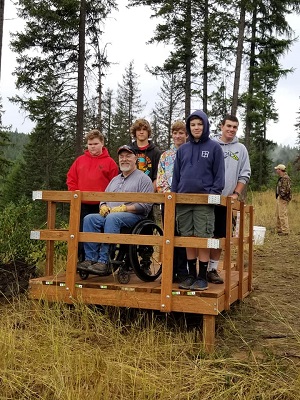
Committee chair, Ken McNaughton, will head up early on Friday to establish a camp site. Those who wish to can join us Friday, or just drive up on Saturday morning. We will patrol the routes on Boundary Mountain. Whatever we didn’t finish on Saturday, we will complete on Sunday before returning home. These annual route patrols are a vital service we provide that allows us a chance to not only inspect our wheelchair platforms for any needed maintenance, but also to cut away winter deadfall, ensuring that sportsmen/women with disabilities have access to the entire route provided. It also gives us a chance to work side by side for a common good and enjoys each other’s company in the spirit of fellowship. Don’t feel like you have to stay overnight on the mountain with us. If you can only make it for the day – we would love to have you! Contact Ken McNaughton for information and directions access@inwc.org
Disabled Access Patrol *Volunteers Needed*
Committee chair, Ken McNaughton, will head up early on Friday to establish a camp site. Those who wish to can join us Friday, or just drive up on Saturday morning. We will patrol the routes on Betty Creek. Whatever we didn’t finish on Saturday, we will complete on Sunday before returning home. These annual route patrols are a vital service we provide that allows us a chance to not only inspect our wheelchair platforms for any needed maintenance, but also to cut away winter deadfall, ensuring that sportsmen/women with disabilities have access to the entire route provided. It also gives us a chance to work side by side for a common good and enjoys each other’s company in the spirit of fellowship. Don’t feel like you have to stay overnight on the mountain with us. If you can only make it for the day – we would love to have you! Contact Ken McNaughton for information and directions access@inwc.org
*Volunteers Needed* Disabled Access Patrol
Committee chair, Ken McNaughton, will head up early on Friday to establish a camp site. Those who wish to can join us Friday, or just drive up on Saturday morning. We will patrol the routes on Brewer & Mitchell Mtns. Whatever we didn’t finish on Saturday, we will complete on Sunday before returning home. These annual route patrols are a vital service we provide that allows us a chance to not only inspect our wheelchair platforms for any needed maintenance, but also to cut away winter deadfall, ensuring that sportsmen/women with disabilities have access to the entire route provided. It also gives us a chance to work side by side for a common good and enjoys each other’s company in the spirit of fellowship. Don’t feel like you have to stay overnight on the mountain with us. If you can only make it for the day – we would love to have you! Contact Ken McNaughton for information and directions access@inwc.org
*Volunteers Needed* Disabled Access Patrol
Committee chair, Ken McNaughton, will head up early on Friday to establish a camp site. Those who wish to can join us Friday, or just drive up on Saturday morning. We will patrol the routes on Aladdin Mtn & Squirrel Meadows. Whatever we didn’t finish on Saturday, we will complete on Sunday before returning home. These annual route patrols are a vital service we provide that allows us a chance to not only inspect our wheelchair platforms for any needed maintenance, but also to cut away winter deadfall, ensuring that sportsmen/women with disabilities have access to the entire route provided. It also gives us a chance to work side by side for a common good and enjoys each other’s company in the spirit of fellowship. Don’t feel like you have to stay overnight on the mountain with us. If you can only make it for the day – we would love to have you! Contact Ken McNaughton for information and directions access@inwc.org
ADA Open House
The Inland Northwest Wildlife Council, and its Disabled Access Team of Ken McNaughton and Ron Zubrick, invites you to join them for a day filled with information for those who have disabilities that create barriers, but still want to enjoy the great outdoors and all it has to offer. You will gain information on new disabled hunter access permit regulations, hear about existing local programs, assistive devices available for disabled sportsmen and locations provided for disabled sportsmen. With many area citizens having barriers that prevent them from fully enjoying our opportunities to hunt, fish, observe wildlife, or enjoy the outdoors, we will share ways to improve accessibility and increase opportunities. If you have a disability or know someone who does and want to regain the thrill of fishing, hunting, and wildlife viewing, then make plans to join us. Lunch is provided! Door Prize for one lucky disabled sportsman/woman: a one-day guided Chinook/Sockeye trip on the Columbia River, donated by John Sowell and “Fishin’4All.” Wow! Please RSVP at 509-487-8552 Inland Northwest Wildlife Council
Disabled Access Route Clearing – Boundary Mtn (near Kettle Falls)
*Dates on this project are subject to change depending on volunteer availability For Route Patrols where we can cover two separate routes due to geographic proximity, part of the D.A. team will arrive ahead of the work day to set up a base camp. The actual work day will be the Saturday of the dates listed. Anyone wishing to be part of the project is welcome to camp the Friday night before, spend the day Saturday working the trails, inspecting/maintaining platforms, then join us for dinner at camp Saturday evening. UTV/ATV’s are welcome (stay on the trail). Due to our agreement with the USFS, we will patrol each of the following routes twice (in two phases) between spring and the first week of October. Contact our office or Committee Chair Ken McNaughton for more information or to RSVP. Office: (509) 487-8552 info@inwc.org Ken McNaughton: (509) 553-9135, inwc.ada@gmail.com
**CANCELLED DUE TO FIRE** Disabled Access Route Clearing – Betty Creek (near Kettle Falls)
This work project has been postponed due to fires in the areas near the gates. We will resume our efforts once the fire is out and the area is safe again. USFS – Betty Cr 48.71136 -118.32156 Contact our office or Committee Chair Ken McNaughton for more information. Office: (509) 487-8552 info@inwc.org Ken McNaughton: (509) 553-9135, access@inwc.org
Disabled Access Platform Installation – Rustlers Gulch
We will need a team of volunteers to help us install a canopy on the existing platform on the lower portion of Rustlers Gulch. Contact our office or Committee Chair Ken McNaughton for more information or to RSVP. Office: (509) 487-8552 info@inwc.org Ken McNaughton: (509) 553-9135, inwc.ada@gmail.com